
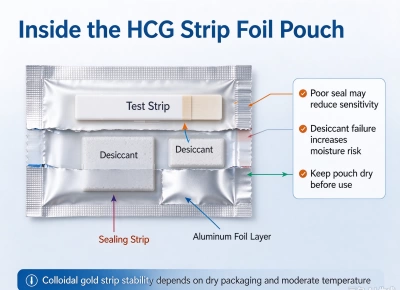
Storage and Transport of Diagnostic Strips: Real-World Effects of Temperature, Humidity, and Packaging Integrity
The stability of colloidal gold strips depends on a dry environment and a relatively moderate temperature range. The 4°C–30°C storage condition on the label is usually easy to meet in home settings, but during sea or air freight from factory to destination warehouse, container temperatures can briefly exceed 50°C in summer.

If the outer aluminum foil pouch is poorly sealed or the desiccant has failed, the strip's moisture absorption capacity and color development sensitivity may decline.
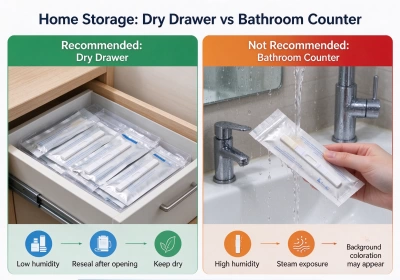
For OEM brands, a simulated transport test before the first bulk shipment is advisable—at minimum, sampling after high-temperature/high-humidity cycling to check whether sensitivity still meets factory release standards. At the end-user level, strips not used immediately after opening should be returned to the foil pouch and the seal pressed firmly, avoiding storage in humid environments such as bathrooms.
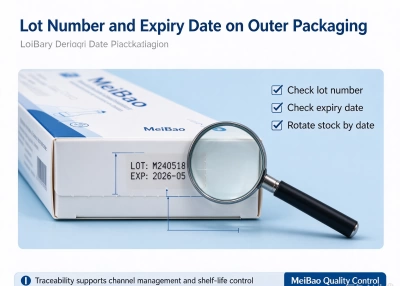
If a strip shows background coloration before sample application, it usually indicates moisture exposure and should not be used. MeiBao prints lot numbers and expiry dates on outer packaging to facilitate channel traceability and stock rotation.
