
Timing and interpretation pitfalls of ovulation test strips in home preconception use
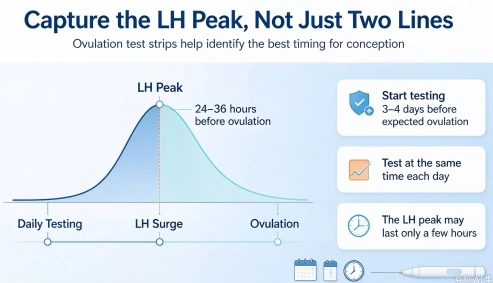
The core value of ovulation testing lies not in "seeing two lines" but in capturing the onset of the LH peak. The LH peak typically occurs 24–36 hours before ovulation, but its duration varies considerably between individuals—in some women it lasts only a few hours. It is therefore advisable to begin daily testing at a fixed time starting 3–4 days before the expected ovulation date, rather than testing on a single day.
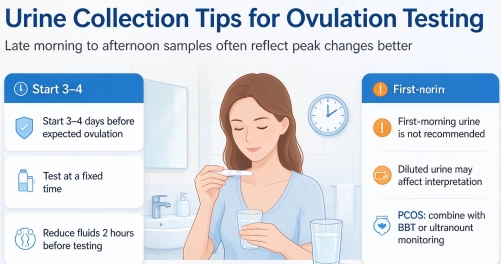
Regarding urine collection, first-morning urine is not recommended for ovulation testing, because LH's diurnal fluctuation pattern differs from HCG; samples from late morning to afternoon often better reflect peak changes. Reducing fluid intake for 2 hours before testing can lower the interference of urine dilution on result interpretation. For people with polycystic ovary syndrome (PCOS), baseline LH may be elevated, so strip results should be combined with basal body temperature or ultrasound monitoring rather than used alone to confirm ovulation.
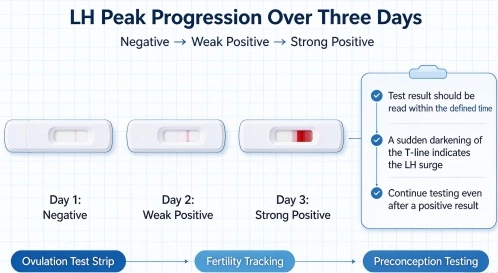
MeiBao's ovulation test line covers strip, cassette, and midstream formats to suit different channels and user habits.
